On 17 December 2024, Deputy Prime Minister Tran Hong Ha signed Decision No. 1587/QD-TTg approving the Adjustment of the Inland Waterway Infrastructure Master Plan for the 2021–2030 period, with a vision to 2050.
TEDI serves as the lead member of the consulting consortium responsible for preparing the adjusted master plan.
The key contents of the adjusted master plan include:
1) Enhancement of Transport Targets
By 2030, the inland waterway transport sector is expected to achieve:
- Freight volume of approximately 835 million tonnes;
- Passenger volume of approximately 418 million passenger trips;
- Freight turnover of approximately 164 billion tonne-kilometers;
- Domestic passenger turnover of approximately 9 billion passenger-kilometers.
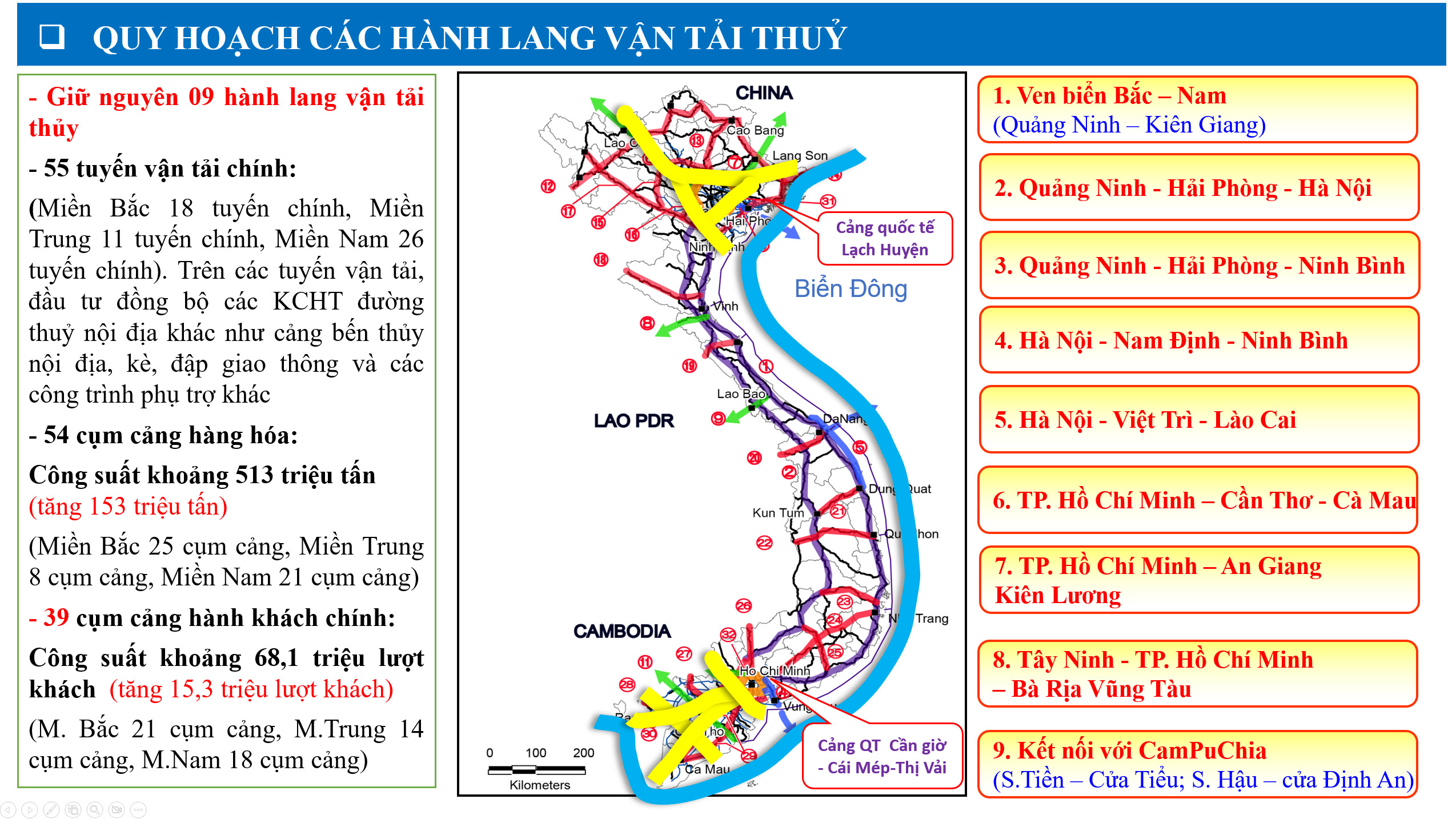
2) Increase in Transport Volume across 09 Inland Waterway Transport Corridors
- Coastal inland waterway corridor from Quang Ninh to Kien Giang: transport volume of approximately 97.5–105 million tonnes, serving coastal provinces and localities with river–sea transport connections. In particular, the Central Region from Thanh Hoa to Binh Thuan includes 11 main transport routes and other rivers capable of connecting directly to the coastal corridor, with a transport volume of approximately 15–18 million tonnes.
- Quang Ninh – Hai Phong – Hanoi corridor: approximately 108–115.7 million tonnes.
- Quang Ninh – Hai Phong – Ninh Binh corridor: approximately 60.3–65.3 million tonnes.
- Hanoi – Nam Dinh – Ninh Binh corridor: approximately 22.4–23.6 million tonnes.
- Hanoi – Viet Tri – Lao Cai corridor: approximately 33.7–36.4 million tonnes.
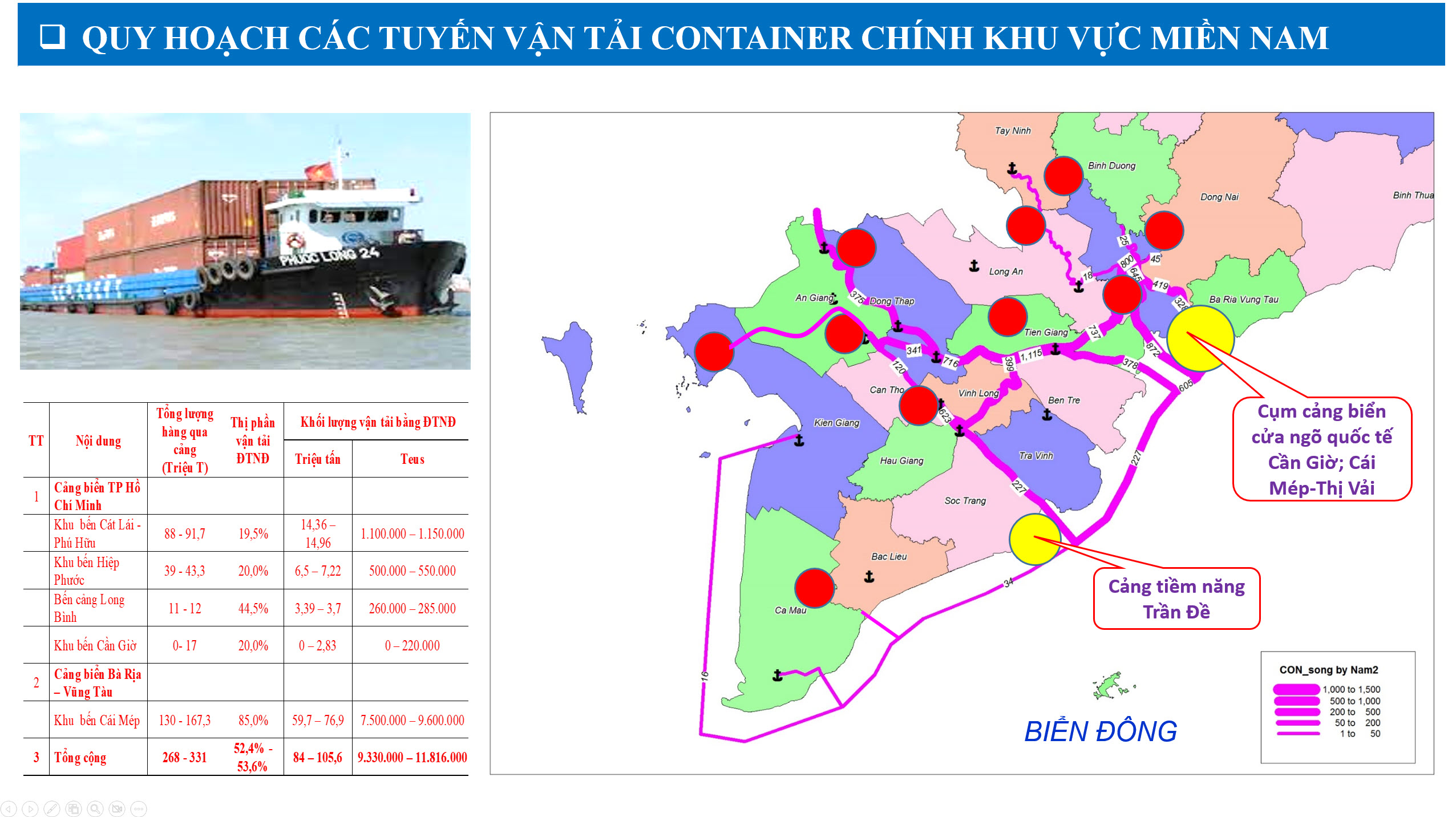
- Ho Chi Minh City – Can Tho – Ca Mau corridor: approximately 264.4–285 million tonnes.
- Ho Chi Minh City – An Giang – Kien Luong corridor: approximately 66.85–70.7 million tonnes.
- Tay Ninh – Ho Chi Minh City – Ba Ria–Vung Tau corridor (Cai Mep–Thi Vai Port Complex – Can Gio International Seaport): approximately 43.3–48.7 million tonnes.
- Inland waterway corridors connecting with Cambodia (via the Tien River and Hau River): approximately 15.1–18.2 million tonnes.
3) Increase in Total Capacity of Port Clusters
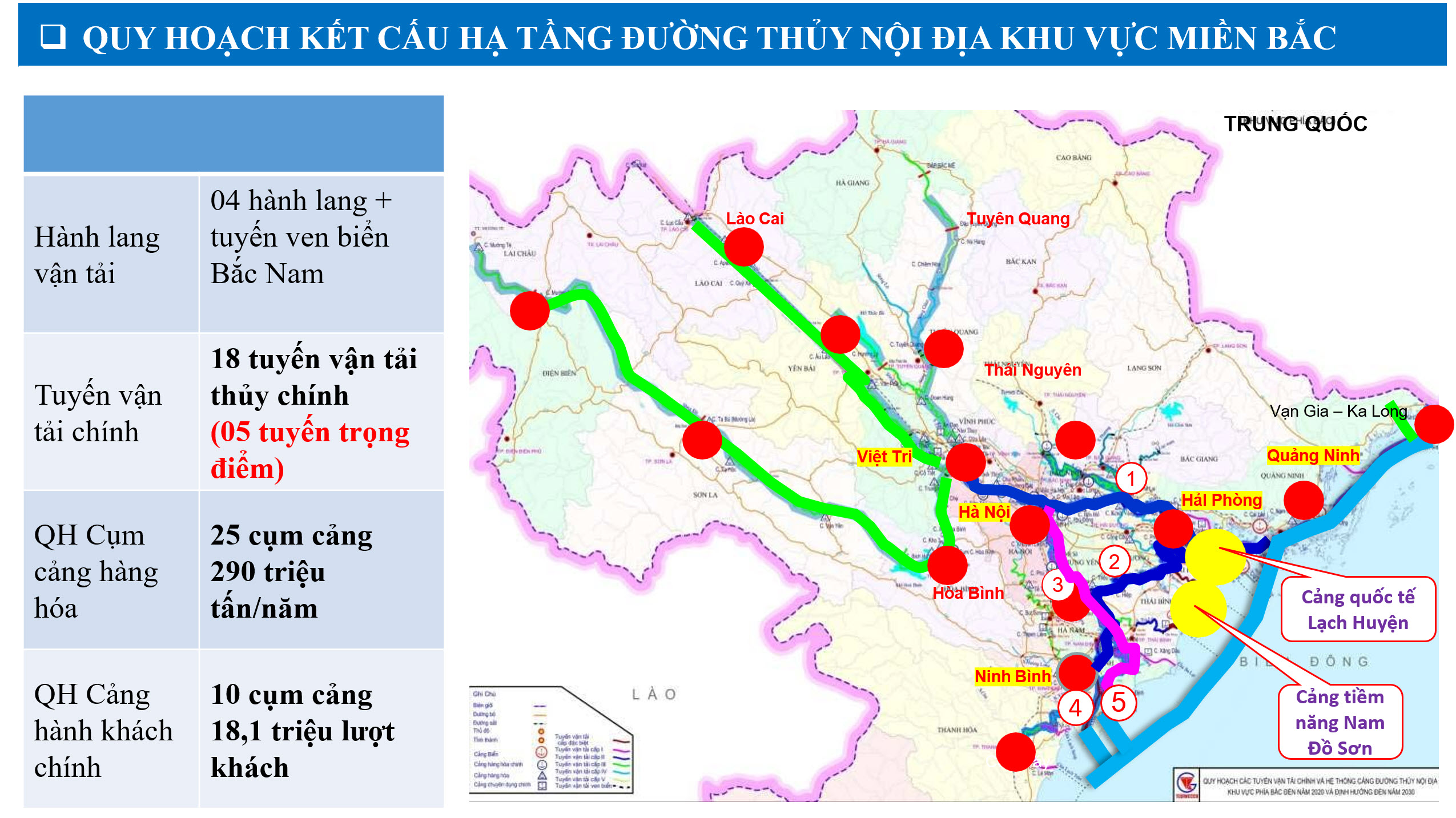
- Cargo ports: Planning for 54 cargo port clusters with a total capacity of approximately 513 million tonnes, including 25 clusters in the North (approximately 290 million tonnes), 08 clusters in the Central region (approximately 19 million tonnes), and 21 clusters in the South (approximately 204 million tonnes).
- Passenger ports: Planning for 39 main passenger port clusters with a total capacity of approximately 68.7 million passenger trips, including 10 clusters in the North (approximately 18.1 million passenger trips), 14 clusters in the Central region (approximately 3.5 million passenger trips), and 15 clusters in the South (approximately 47.1 million passenger trips).
4) Increased Demand for Land and Water Surface Use
- Land use demand by 2030 increases from approximately 5,908 ha to 6,569 ha (Northern region: approximately 3,219 ha; Central region: approximately 421 ha; Southern region: approximately 2,929 ha).
- Water surface use demand increases from approximately 8,765 ha to 9,775 ha (Northern region: approximately 4,667 ha; Central region: approximately 568 ha; Southern region: approximately 4,540 ha).
5) Investment Capital Requirements
Total investment demand for inland waterway infrastructure during the 2021–2030 period increases to approximately VND 187,533 billion (excluding investment costs for dedicated navigation channels and specialized ports).
The Government assigns the Ministry of Transport to take the lead, in coordination with provincial People’s Committees, in determining locations and capacity scales of ports classified under “other ports” as specified in Appendix III (attached to Decision No. 1587/QD-TTg). These contents will be incorporated by local authorities into provincial master plans and related implementation plans as a basis for investment.